
Divorce in your 50s can feel overwhelming, but having clear guidance helps you face this stage with confidence. At The Family Law Group, we work with clients across Cleveland and Northeast Ohio to guide you through every step of the divorce process in Ohio. You may have questions about dividing property, retirement accounts, or spousal support, and our attorneys provide practical advice based on the divorce laws in Ohio.
Each situation is different, and we focus on helping you move through the process efficiently while addressing the financial and legal matters that matter most. Whether you are considering a traditional divorce or a dissolution, you will learn how to approach negotiations, understand filings, and work with the courts to resolve disputes. Our goal is to help you navigate this transition with clarity, providing support and strategies tailored to your specific circumstances.
What Gray Divorce Means in Ohio
Gray divorce refers to the ending of a marriage among adults typically over 50. Couples in this age group often face complex financial and legal matters, including retirement accounts, pensions, and property accumulated over many years. It can also bring emotional adjustments as you and your spouse redefine your lives after a long partnership.
Why More Couples Over 50 Are Ending Long-Term Marriages
Divorce rates among adults over 50 have increased in recent decades. Many people in this age group find that their priorities and lifestyles have changed over time. Some seek personal growth or independence that was not part of their earlier years. Others face financial shifts, such as changes in income or retirement expectations, that influence decisions to separate. Differences in long-term goals or new personal interests also play a role.
Common Factors That Lead to Gray Divorce
Gray divorce often results from differences in finances and lifestyle priorities. Typical reasons include:
- Conflicts over retirement planning that affect both short-term and long-term financial stability
- Shifts in household responsibilities that create tension over daily roles
- Separate social or personal goals that no longer align with the marriage
- Differences in long-term financial strategies, such as investments, savings, and estate planning
Key Issues in a Divorce After 50
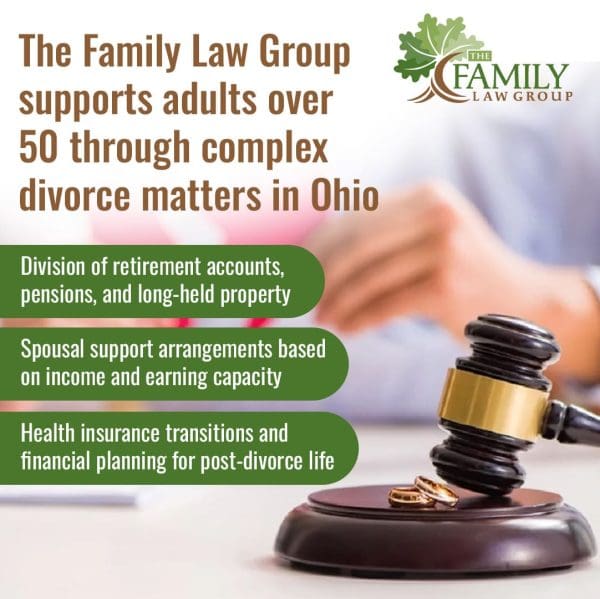
Financial complexity is a primary concern in divorce in your 50s. You are likely dealing with shared homes, savings, investments, and pensions accumulated over many years. Each of these assets carries both legal and practical implications, and addressing them early helps reduce stress during the process.
Dividing Long-Term Assets
Marital assets are divided equitably under Ohio divorce laws. These assets may include your home, vehicles, investment accounts, and any other property acquired during the marriage. The courts examine the length of your marriage and the contributions each spouse made, whether through income, homemaking, or other support.
You may need to provide documentation showing ownership and value for each asset. Property that was owned before marriage or received as a gift or inheritance typically remains separate, but disputes sometimes arise, making professional guidance important.
Understanding Spousal Support for Older Adults
Spousal support is based on income, marriage duration, and earning capacity. In marriages that last several decades, one spouse may have limited experience or opportunity in the workforce, which can lead to longer support arrangements.
The court considers the lifestyle established during the marriage, health, and ability to earn when determining support amounts. You may discuss options for temporary or long-term support, depending on your circumstances and financial resources.
Health Insurance and Financial Planning Concerns
Maintaining health coverage is important during and after a divorce after 50. You might face gaps if coverage was previously shared, or premiums may increase if you need to secure insurance independently.
Planning for ongoing medical costs, including prescriptions and long-term care, can prevent unexpected financial strain. Reviewing your insurance options early allows you to make adjustments without waiting for the divorce to finalize.
Retirement Accounts and Pension Division
Retirement accounts and pensions are subject to division in a gray divorce. These include:
- 401(k) and IRA accounts
- Employer pensions
- Other retirement savings
Courts often use Qualified Domestic Relations Orders (QDROs) to divide these assets correctly. You will need accurate account statements and documentation of contributions over the years. Since these accounts represent income for later life, dividing them carefully is critical to maintaining financial stability post-divorce.
Real Estate and Mortgage Considerations
Property division requires careful planning. You may decide to sell the home, refinance it to allow one spouse to retain ownership, or arrange a buyout. Decisions depend on the current mortgage balance, the home’s market value, and ongoing maintenance responsibilities.
A clear strategy for managing real estate can prevent disagreements and provide clarity for both parties during the divorce.
Divorce Process in Ohio for Adults Over 50
The divorce process in Ohio involves specific legal steps. Adults over 50 face different challenges than younger couples, including dividing long-term assets and addressing retirement accounts. You have options, and knowing the differences can help you move forward with clarity.
Two Main Paths: Divorce vs. Dissolution
Divorce begins when one spouse files a legal complaint. This path is typically chosen when there are unresolved issues or disagreements about property, finances, or spousal support. It can involve multiple court appearances, and sometimes a judge must make final decisions if agreements cannot be reached.
Dissolution occurs when both spouses reach full agreement on terms before filing. This approach is generally quicker and less confrontational. It allows both of you to outline property division, spousal support, and other financial matters without the need for extended court hearings. Dissolution can be a practical choice if you and your spouse are aligned on all aspects of the separation.
Quick Comparison Table: Divorce vs. Dissolution in Ohio
| Factor | Divorce | Dissolution |
| Filing | One spouse files | Joint filing |
| Agreement | Not required before filing | Required before filing |
| Court Hearings | Several | Usually one |
| Timeline | Longer | 30–90 days |
What the Court Reviews in a Divorce After 50
Courts examine financial disclosures and agreements. They look closely at marital assets, debts, retirement accounts, and spousal support arrangements. The court reviews the documentation you provide to confirm that both parties are represented fairly in the division of property and financial responsibilities.
When Litigation Becomes Necessary
Litigation occurs when spouses cannot reach an agreement. If there are disputes over asset division, retirement funds, or support obligations, a judge may need to make final decisions. This path is more formal and involves hearings where each side presents their case and supporting documents.
The Family Law Group guides clients through both traditional divorce and dissolution processes. Our attorneys provide support, help you understand the steps involved, and represent your interests in court when litigation becomes necessary.
Divorce Laws in Ohio That Affect Couples Over 50
Divorce laws in Ohio guide asset division and spousal support in gray divorce. Marital property is divided fairly, while separate property remains with the original owner. These laws recognize the length of the marriage and contributions made by each spouse, which is especially relevant for couples who have built financial stability over decades. Understanding which assets belong to the marriage and which are separate can prevent misunderstandings and reduce conflict during proceedings.
Marital vs. Separate Property
Marital property consists of assets acquired during marriage. This includes homes, bank accounts, vehicles, investments, and other items obtained while you were married. By contrast, separate property remains with the individual spouse who owned it before the marriage or received it as a gift or inheritance.
Knowing the difference between these categories helps you see which assets may be divided and which remain solely yours. This distinction can affect negotiations and any discussions about spousal support or retirement account division.
How Ohio Courts View Long-Term Marriages
Courts consider long-term contributions of both spouses. If you have spent decades building shared financial and personal assets, the court will review those contributions carefully. Ohio courts often examine how each spouse contributed to the marriage, including non-financial efforts like maintaining the household or supporting a partner’s career.
Longer marriages typically involve closer scrutiny of retirement accounts, property holdings, and other financial matters to reach an equitable outcome. Recognizing these considerations helps you prepare for discussions about asset division and support.
Rules That Apply to Asset Division
Courts evaluate multiple factors when dividing property. Some of the main considerations include:
- Income and earning capacity – The court looks at current and potential income for both spouses.
- Age and health – Health conditions and age-related circumstances may influence property division and support needs.
- Contributions to property and household – Both financial and non-financial contributions are reviewed.
- Post-divorce financial needs – The court evaluates the standard of living each spouse can reasonably maintain after divorce.
These factors help the court determine what a fair division looks like for couples over 50. They may affect property settlements, spousal support, or the allocation of retirement accounts.
Spousal Support Factors in Ohio
Support decisions are based on financial need and ability to pay. Courts examine the length of the marriage, income differences, health conditions, and potential future earnings.
If you are planning for life after divorce, these considerations play a major role in determining the duration and amount of spousal support. Understanding how the court reviews these elements can give you insight into what to expect during negotiations or hearings.
The Family Law Group works with clients over 50 to provide guidance on Ohio divorce laws. Our attorneys explain how marital and separate property, asset division rules, and spousal support factors may affect your case and help you prepare thoroughly for each step.
Preparing for a Gray Divorce
Preparation for divorce in your 50s helps avoid delays and disputes. Gathering documents and reviewing financial details helps you approach the process with clarity and confidence.
Documents to Gather
Important documents include:
- Bank and investment statements – Track checking, savings, and brokerage accounts to show balances and transaction history.
- Retirement account summaries – Include 401(k), IRA, pension, and other retirement plans to assist in division planning.
- Property and mortgage records – Provide details on current ownership, mortgages, and outstanding debts on real estate.
- Tax returns – Review several years of federal and state filings to capture income, deductions, and reported assets.
- Insurance policies – Include life, health, and property policies that may affect post-divorce financial planning.
Questions to Ask an Attorney
Ask questions focused on:
- Asset division strategies – How assets will be classified and divided based on Ohio divorce laws.
- Spousal support calculations – What factors influence potential support payments and duration.
- Property classification – Which property is considered marital versus separate under Ohio law.
- Retirement account division – How pensions and retirement savings can be split using legal procedures like QDROs.
Planning for Life After the Divorce
Plan finances and housing early. You should look beyond the divorce filing and start arranging practical aspects of your future.
This includes budgeting for ongoing expenses, evaluating housing options, and reviewing health coverage. Maintaining long-term savings and reviewing retirement accounts will help you adjust to new financial realities. Thinking ahead allows you to manage the transition with greater control and reduces surprises that may arise after the divorce is finalized.
At The Family Law Group, we guide clients through this stage, and our team works with you to handle each detail carefully and address concerns specific to adults going through gray divorce.
How The Family Law Group Supports Clients Over 50
Our attorneys provide guidance for all aspects of gray divorce. We help clients with asset division, spousal support, and alternative dispute resolution options.
Guidance on Asset Division
We review marital assets thoroughly. You will receive advice on how Ohio law treats property acquired during your marriage, as well as separate assets. Our attorneys walk you through options for dividing investments, retirement accounts, and real estate, helping you see the impact of each choice on your financial future.
Assistance With Spousal Support Matters
We calculate potential support obligations. Our team looks at income levels, the duration of your marriage, and retirement considerations to guide discussions on spousal support. This helps you plan for your financial needs and the obligations of your former spouse in a way that follows Ohio’s guidelines.
Support Through Mediation or Collaborative Divorce
We help clients reduce conflict. If both spouses are open to discussion, mediation, or collaborative divorce offers a method to reach agreements outside the courtroom. These approaches allow you to maintain control over negotiations and move through the process with less stress and fewer delays.
When Litigation Is Required
We represent clients in court. When negotiations or mediation cannot resolve disputes, our attorneys advocate for you in front of a judge. We present your financial and legal arguments clearly, working to achieve outcomes that reflect Ohio law and your personal circumstances.
Schedule a Consultation Today
If you are considering divorce after 50 or have questions about the divorce process in Ohio, reach out to The Family Law Group today. Our experienced attorneys in Cleveland can guide you through asset division, spousal support, and other aspects of gray divorce. Call us at (216) 239-5050 or visit our Contact Page to schedule a consultation and discuss your options with a skilled family law professional.
Schedule a Consultation
You can get in touch with us through phone or our contact form. However, contacting us does not automatically create an attorney-client relationship. For these reasons, please refrain from sending any confidential information to us before we establish a legal attorney-client relationship.
Are you in the Cleveland and Northeast Ohio area? We are here to answer all your questions, schedule your initial consultation today!
 SCHEDULE A CONSULTATION