
When you face questions about ending a marriage, it is important to know the difference between annulment and divorce. At The Family Law Group, we guide clients through these complex legal processes in Ohio with clarity and professional support. Understanding the distinction between annulment and divorce helps you determine which process applies to your situation.
An annulment of a marriage declares that a marriage was never legally valid, while divorce formally ends a marriage recognized by law. Each option follows different legal requirements, timelines, and impacts on property and financial matters. Our team works closely with you to review your circumstances, explain the criteria for annulment or divorce, and assist with filing the necessary paperwork. Whether you are considering annulment or preparing for divorce, we provide clear guidance and practical steps to move through the process efficiently while protecting your legal interests.
Understanding Annulment in Ohio
When a marriage faces legal challenges, it helps to know the options available in Ohio. Annulment offers a distinct process that differs from divorce and affects how the law treats the marriage.
Definition of Annulment
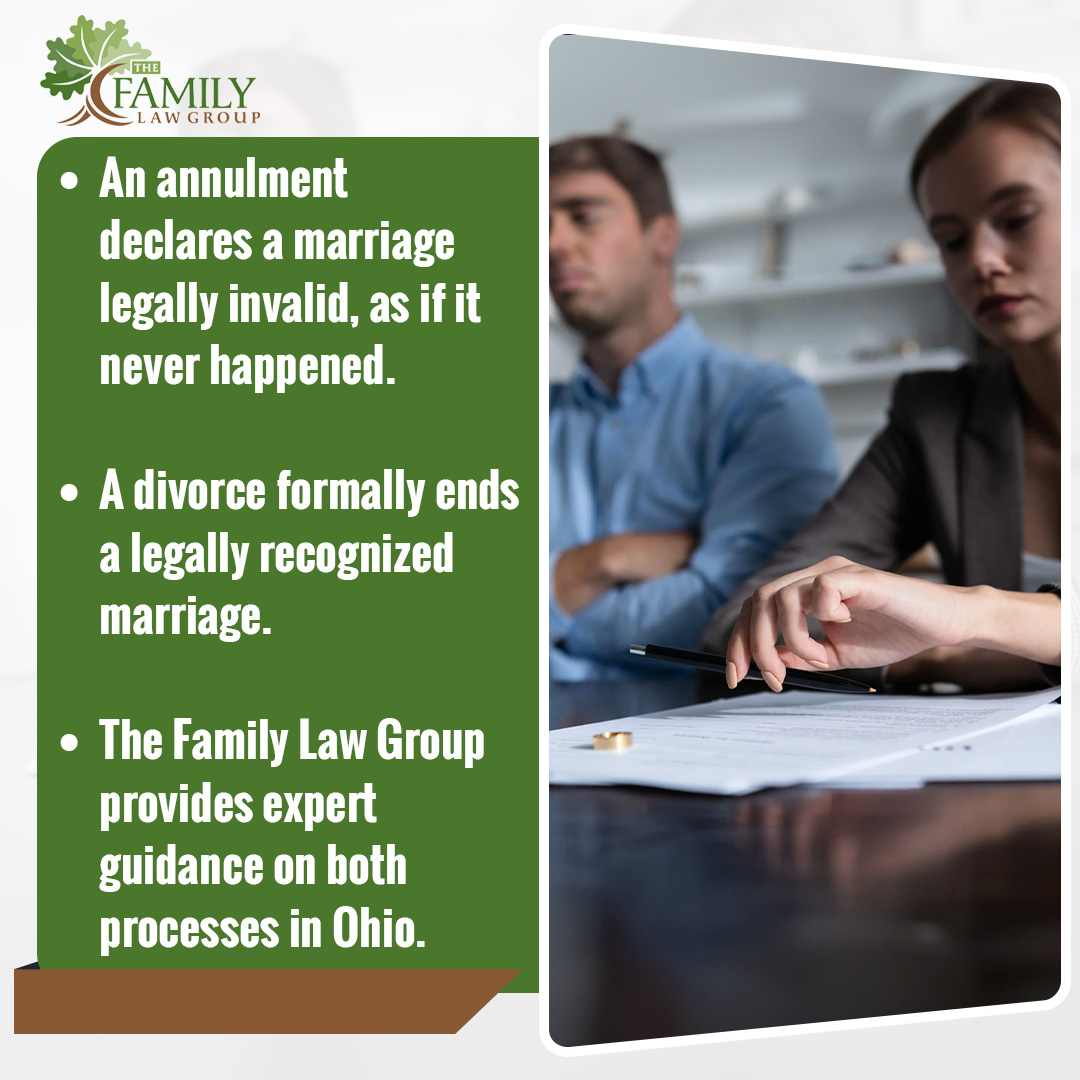
An annulment in Ohio legally declares a marriage invalid. This means the marriage is considered never to have existed under the law. Unlike divorce in Ohio, which ends a valid marriage, annulment removes legal recognition from the start.
In practical terms, this can influence property claims and financial responsibilities. For example, marital property acquired during an invalid marriage may not be divided in the same way as in a divorce, and spousal support obligations generally do not apply.
Legal Grounds for Annulment in Ohio
Ohio courts approve annulments under specific conditions. The law identifies circumstances where a marriage is not legally valid, and the courts require evidence to support each claim.
Common legal grounds for annulment of a marriage include:
- Fraud or misrepresentation: One spouse was misled about essential facts that influenced the decision to marry. For example, concealing a pre-existing marriage can serve as grounds for annulment.
- Bigamy or pre-existing marriage: Ohio law does not recognize multiple simultaneous marriages. If one spouse is already married, the second marriage is void.
- Underage marriage without consent: Individuals under 18 must meet certain consent requirements. Marriages without required approvals may be annulled.
- Mental incapacity: A spouse must be able to understand the nature of marriage. Ohio courts will annul marriages where one party lacked the capacity to consent due to mental conditions.
- Force or coercion: If threats or pressure forced one party into marriage, the court can declare the marriage invalid.
Each of these claims requires supporting documentation or testimony. The court carefully examines evidence, and annulment is granted only if the legal criteria are fully met.
What Divorce Means in Ohio
Divorce can be a complex and emotional process. Knowing how the law addresses your marriage and financial responsibilities helps you approach the process with clarity.
Definition of Divorce
Divorce in Ohio legally ends a valid marriage. This means that the court recognizes your marriage as having existed and grants a formal termination. Divorce provides a legal structure to address issues such as property ownership, debt responsibility, and financial support.
In Ohio, nearly 2.6 divorces occur per 1,000 residents each year, reflecting the need for clear legal guidance for married couples seeking separation. The process also confirms each spouse’s rights and obligations under state law, allowing you to resolve disputes through a recognized legal framework rather than informal agreements.
Types of Divorce
Divorce in Ohio can be contested or uncontested.
- Contested Divorce: If you and your spouse cannot agree on terms, the court may hold hearings to settle property division, support, or other legal matters. Contested divorces can take months or even years, depending on complexity and the number of disputes involved.
- Uncontested Divorce: When you and your spouse agree on all terms, the process moves more quickly. Uncontested divorces can often be finalized in 60 to 90 days, reducing both legal fees and time spent in court.
Alternative Dispute Resolution options, including collaborative divorce or mediation, can help you manage disagreements without lengthy litigation.
Key Legal Outcomes in Divorce
Divorce addresses property and financial matters.
- Division of Property: Ohio follows an equitable distribution standard, which divides marital assets and debts fairly, though not necessarily equally. This includes homes, vehicles, bank accounts, and retirement savings. Courts consider contributions from both spouses, duration of the marriage, and financial circumstances.
- Spousal Support: The court may require one spouse to provide financial support to the other, depending on factors such as income disparity, employment history, and standard of living during the marriage. Spousal support can be temporary or long-term depending on the situation.
These legal outcomes create a formal resolution that protects both parties’ rights. Divorce allows you to move forward with clear legal documentation of responsibilities and financial obligations, reducing future disputes.
Comparing Annulment and Divorce
Deciding between annulment and divorce can feel complex because each process has different legal consequences. This section will clarify how the two options differ so you can see which approach aligns with your situation.
Legal Status of the Marriage
Annulment treats the marriage as never valid, while divorce ends a legally recognized marriage. With an annulment, the law considers that the marriage never existed from the start. This means that the marriage does not appear on certain legal records as a valid union.
Divorce, on the other hand, formally ends a marriage that the state recognizes as valid. This difference changes how the law views your financial responsibilities, any agreements made during the marriage, and the overall legal recognition of your relationship. By knowing this distinction, you can anticipate the legal effects of choosing one process over the other.
Property and Financial Considerations
Property and financial responsibilities differ between annulment and divorce. In most annulments, disputes over property or assets are limited because the marriage is considered invalid. The law often treats the property as if the marriage had never occurred, which can simplify the distribution process.
With a divorce in Ohio, however, the courts actively manage the division of assets and debts. Spousal support may also be part of the decision, depending on factors such as the length of the marriage and the financial contributions of each spouse. Understanding how each process handles property and finances helps you anticipate potential outcomes.
Filing Requirements and Time Limits
Annulment has stricter filing requirements than divorce. Certain annulment claims must be submitted within specific timeframes. For example, cases involving underage marriage or fraud have deadlines that limit when you can file.
Divorce filings, while requiring valid legal grounds such as incompatibility or adultery, usually do not carry strict time limits. Knowing these requirements helps you plan the legal steps and prepare the documentation needed to support your case.
Summary Table: Annulment vs Divorce
| Feature | Annulment | Divorce |
| Legal Status | Marriage never existed | Marriage existed but ends legally |
| Property Division | Usually limited | Court divides assets and debts |
| Eligibility | Must prove marriage invalid from the start | Requires legal grounds such as incompatibility or adultery |
| Filing Deadlines | Some claims have strict time limits | Generally flexible filing rules |
This comparison highlights the main differences between annulment vs. divorce in Ohio. The Family Law Group works with clients to review these distinctions carefully, helping you take the right legal steps for your situation while addressing property, financial obligations, and filing requirements effectively.
Choosing Between Annulment and Divorce
Deciding whether to pursue an annulment or a divorce can feel overwhelming. You may wonder which legal path fits your situation and what each process involves. This section will break down the options so you can see the differences clearly.
When Annulment May Apply
Annulment is appropriate when a marriage was legally invalid from the start. You may consider annulment if there was deception about key facts before marriage, or if one spouse was already married to someone else. Other situations include marriages involving individuals under the legal age without proper consent, or when a spouse could not legally give consent due to mental incapacity. Annulment can also apply if the marriage was entered into under force or pressure.
In each case, Ohio law requires proof that the marriage was never valid. The court examines evidence and facts from the beginning of the marriage to determine whether an annulment is granted. This process addresses legal recognition and may limit obligations compared to divorce.
When Divorce May Be Appropriate
Divorce is suitable when a valid marriage cannot continue. If the marriage is legally recognized but cannot continue due to differences or disputes, divorce provides a formal process to end it. Through divorce, the court addresses the division of property, financial responsibilities, and any other obligations between spouses. Unlike annulment, divorce recognizes that the marriage existed and concludes it officially through the legal system.
This process can involve mediation, collaborative approaches, or litigation, depending on the circumstances. Each option allows you to work with your spouse and legal professionals to reach a resolution that is recognized under Ohio law.
How Legal Guidance Helps
Experienced attorneys guide clients through annulment or divorce in Ohio. Your attorney will review the facts of your marriage to determine which legal path applies. They collect necessary documentation, file the petitions with the court, and handle all procedural steps on your behalf. This guidance protects your rights, clarifies the steps ahead, and helps the process proceed efficiently within the framework of Ohio law.
With professional support, you can focus on the next stage of your life rather than managing complex legal procedures alone. At The Family Law Group, we work closely with you at every step, explaining the options and helping you navigate the legal process for either annulment or divorce.
About The Family Law Group in Cleveland, Ohio
Handling an annulment or divorce can feel overwhelming. Knowing where to turn for legal guidance can make the process clearer and more manageable.
Services Related to Annulment and Divorce
The Family Law Group provides legal services for annulment and divorce in Ohio. You can rely on our team to guide you through the steps required to address your marriage legally and efficiently. Their offerings include:
- Legal Dissolution: Allows you to end a marriage without prolonged court disputes. It provides a structured process for couples who can work together toward an agreement.
- Collaborative Divorce: Offers an alternative approach to traditional litigation. You and your spouse work with attorneys to settle matters privately while avoiding a courtroom setting.
- Divorce Mediation: Provides a neutral professional to help negotiate property and financial matters. Mediation keeps discussions focused and often reduces time and stress compared to full litigation.
Each service is designed to provide clarity and direction, depending on the circumstances of your marriage and the legal route you need to follow.
Speak with a Cleveland Family Law Expert Today
The Family Law Group is ready to guide you through annulment or divorce in Ohio. Our experienced attorneys review your situation, explain your legal options, and help you move forward with clarity and confidence.
Call us today at (216) 239-5050 to schedule a consultation, or visit our Contact Page to submit your request online. Let us provide the legal guidance you need to address property, financial matters, and filing requirements efficiently.
Schedule a Consultation
You can get in touch with us through phone or our contact form. However, contacting us does not automatically create an attorney-client relationship. For these reasons, please refrain from sending any confidential information to us before we establish a legal attorney-client relationship.
Are you in the Cleveland and Northeast Ohio area? We are here to answer all your questions, schedule your initial consultation today!
 SCHEDULE A CONSULTATION