
If you are preparing for a dissolution hearing in Ohio, you may be wondering what a dissolution of marriage means and what steps you need to take. At The Family Law Group, we guide clients through the process, explaining the requirements set by dissolution of marriage laws in Ohio and helping you navigate the legal procedures with clarity. A dissolution allows couples to end their marriage in a non-adversarial manner, provided all agreements regarding property, support, and parenting have been reached.
Our team of experienced family law attorneys in Cleveland, Ohio, works closely with you to review separation agreements, complete necessary forms, and prepare for the hearing. Knowing the types of questions a judge will ask and how the hearing unfolds can reduce surprises and make the process smoother. With personalized guidance, we help you move forward while protecting your rights and fulfilling all legal requirements under Ohio law.
Understanding the Final Dissolution Hearing
The final dissolution hearing is the step that officially closes your marriage under Ohio law. Knowing what to expect can help you feel prepared and more confident as you move through the process.
Purpose of the Hearing
The final dissolution hearing legally ends a marriage in Ohio. During this hearing, the judge reviews all agreements you and your spouse have made. You will confirm that these agreements are complete and voluntary, covering matters such as property division, financial support, and parenting responsibilities.
The hearing is not about debating or contesting issues; it is the court’s way of formally approving the arrangements you have already made. By completing this process, the court records the agreements in an official judgment, making them enforceable under Ohio law and in line with dissolution of marriage laws in Ohio.
How It Differs from Divorce Court
Dissolution is non-adversarial, unlike divorce proceedings. In a divorce, disputes over property, support, or custody can lead to multiple hearings and extended court involvement. A dissolution, on the other hand, moves forward only after you and your spouse have agreed on every matter. This means the process is usually faster, less stressful, and more private, allowing you to avoid courtroom conflicts.
Attendance Requirements
Both spouses and their attorneys must attend the hearing. The court requires your presence to confirm that all agreements are accurate and voluntary. Your attorney can guide you through any questions from the judge, but being present yourself is essential. Some courts may allow exceptions in rare circumstances, but generally, both parties appear in person to finalize the dissolution.
Preparing for the Final Dissolution Hearing
Before attending your final dissolution hearing, there are a few steps you need to complete to be ready. These steps involve reviewing your agreements, completing required forms, and working closely with a qualified attorney.
Reviewing the Separation Agreement
You must review the separation agreement before the hearing. The separation agreement lays out how your assets, debts, and financial responsibilities will be divided between you and your spouse. It also addresses support arrangements and the parenting plan if children are involved.
Taking time to go through each section allows you to clarify any points that may be confusing or require adjustment. If questions arise about specific clauses or financial matters, a dissolution attorney can walk you through the details and explain how each part applies to your situation. Being familiar with the agreement before the hearing helps the process move smoothly and avoids surprises in court.
Completing Required Forms
Forms for Dissolution of Marriage in Ohio
Ohio requires specific forms to complete a dissolution. The court will not schedule the final hearing until all required paperwork is properly submitted. These forms include:
- Petition for Dissolution of Marriage
- Separation Agreement
- Affidavit of Income and Expenses
- Health Insurance Affidavit
Filling out these forms accurately reflects the agreements you and your spouse have made. Using the correct forms for dissolution of marriage in Ohio allows the court to process your case without delays and keeps the hearing focused on confirming the agreements rather than correcting paperwork.
Parenting Plans and Seminars
Parents must complete a parenting plan and attend a court-approved seminar if children are involved. The parenting plan spells out custody arrangements, visitation schedules, and how decisions about your children will be made. Completing the seminar and submitting your certificate to the court is necessary before the judge can approve the final dissolution. Following these steps helps show the court that both parents are actively participating in a process designed for the children’s benefit.
Working With a Dissolution Attorney
A dissolution attorney guides you through paperwork and court procedures. Your attorney reviews the separation agreement and all forms to verify accuracy and completeness. They also represent you at the hearing, answer questions from the judge, and help explain anything that may require clarification. Having a qualified attorney can prevent mistakes that might delay the process and make sure the terms align with dissolution of marriage laws in Ohio.
Typical Questions Asked by the Judge
At the dissolution hearing, the judge will ask questions to verify information and confirm that both spouses agree to the terms. Being familiar with these questions helps you feel more confident and prepared during the hearing.
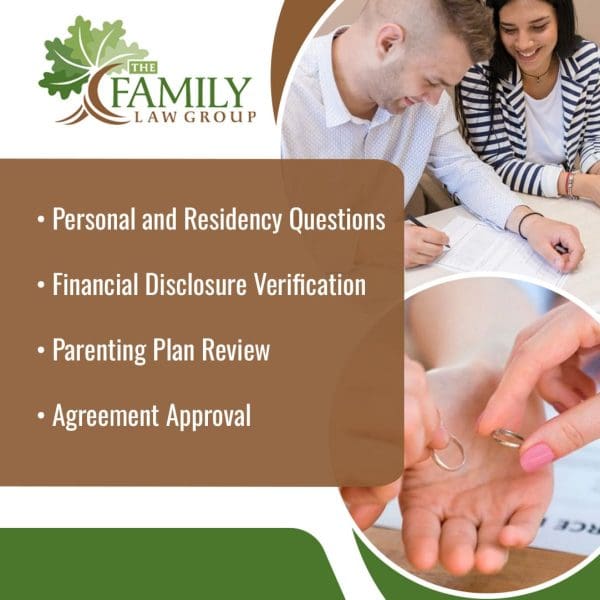
Personal and Marital Information
Judges confirm your identity and marriage details. These questions help the court verify basic facts about your marriage and residency. You may be asked:
- What is your full name?
- What is your current address?
- When did you get married?
- How long have you lived in the State of Ohio?
- How long have you lived in this county before filing the petition?
Answering these questions accurately clarifies what does a dissolution of marriage mean regarding residency requirements and eligibility for filing in Ohio.
Financial Disclosure Questions
Spouses are asked to confirm full disclosure of assets and debts. The judge reviews financial information to make sure all property, debts, and income have been openly shared.
Typical questions include:
- Have you provided a full and complete disclosure of your assets and liabilities?
- Do you believe your spouse has provided full disclosure of their assets and liabilities?
- Do you own any bank accounts, retirement accounts, or investments?
- Do you have any outstanding debts or loans?
This step follows dissolution of marriage laws in Ohio and helps the court approve agreements that are accurate and fair.
Questions About Children and Parenting Plan
Judges review child-related agreements. If children are involved, the judge will ask questions to confirm that the parenting plan reflects their best interests. You may be asked:
- Do you have any children, and if so, what are their names and birthdates?
- Are you currently pregnant?
- Do you agree that the parenting plan addresses custody, visitation, and decision-making responsibilities?
- Do you believe the terms of the parenting plan are in the best interests of your children?
Confirmation of Agreement Terms
Spouses confirm understanding of the separation agreement. The judge may ask:
- Do you understand the separation agreement?
- Do you agree to all the terms regarding assets, debts, and support arrangements?
Requests for Court Approval
The judge asks if you want the court to adopt the agreements. These questions may include:
- Do you want the court to adopt your separation agreement?
- Do you want the court to adopt your parenting plan?
- Are you requesting that the court dissolve your marriage?
Name Change Considerations
Spouses may request restoration of a maiden or former name. The judge may ask:
- Do you want to return to your maiden or former name?
What Happens During the Hearing
During the final dissolution hearing, you will take part in a structured process that allows the judge to review your agreements and confirm details. Knowing what to expect can help you feel more prepared and confident during this step.
Swearing-In Procedure
Spouses are sworn in before answering questions. At the start of the hearing, the judge or court clerk will have you take an oath. This step requires you to promise to tell the truth while responding to questions. It is a standard part of the process and is designed to record honest statements officially.
Questioning Process
The judge asks straightforward verification questions. These questions cover basic information, such as your full name, address, date of marriage, financial disclosures, and details about any children. The judge will also confirm that both spouses agree to the terms of the separation agreement and, if applicable, the parenting plan. Answering clearly and calmly helps the court move through the hearing efficiently.
How Attorneys Assist
Attorneys clarify questions and guide responses. Your attorney can rephrase questions or provide prompts if something is unclear. They help you respond accurately and make sure that all statements are recorded properly in the court transcript. Having a dissolution attorney by your side can reduce confusion and make the process more manageable.
At The Family Law Group, our experienced attorneys guide clients through every step of the hearing, providing support so that you can focus on presenting your information clearly while the court finalizes your dissolution.
After the Hearing
Once the dissolution hearing concludes, the final steps focus on documenting and securing the court’s decisions. These actions confirm that your agreements are legally recognized and available for any future needs.
The Judgment Entry
The judge signs a Judgment Entry to finalize the dissolution. This court order officially incorporates the separation agreement and parenting plan. By signing the Judgment Entry, the court makes your agreed-upon terms enforceable, including property division, support arrangements, and parenting responsibilities. The document serves as the formal record that your marriage has been legally dissolved under Ohio law.
Receiving Certified Copies
You receive a certified copy of the Judgment Entry. Certified copies act as proof for completing legal tasks, such as restoring a former name, updating bank and investment accounts, or revising insurance policies. These copies carry the court’s seal and are recognized by government agencies, financial institutions, and other organizations as official documentation.
Next Steps for Your Records
Store certified copies securely for future reference. Keeping your copies safe allows you to access them if questions arise or if another certified copy is needed. Additional copies can be requested from the court clerk, and you may need to pay a small fee for each one. Handling these documents carefully ensures that you have the official records ready whenever they are required.
At this stage, The Family Law Group can guide you in maintaining your documents and answering any questions about using the Judgment Entry for legal or financial matters.
Why Hiring a Dissolution Attorney Matters
Going through a dissolution can feel overwhelming, especially with forms, court procedures, and deadlines to follow. Having a skilled attorney by your side allows you to focus on the process without being weighed down by paperwork or legal technicalities.
Ensuring Accuracy of Forms
Attorneys prevent errors on required Ohio forms. You may not realize how small mistakes, like missing information or incorrect signatures, can cause delays or even require refiling. A dissolution attorney reviews each form carefully, making sure all documents meet the court’s standards and are submitted correctly the first time. Correctly completed forms reduce the risk of delays or rejections from the court, keeping your case moving forward smoothly.
Protecting Your Rights
A dissolution attorney safeguards your legal and financial interests. Legal agreements about property, support, and custody can have lasting effects on your future. Your attorney checks that every term in the separation agreement reflects your intentions and complies with Ohio law. This guidance helps prevent unintended consequences and keeps your rights protected throughout the process.
Reducing Potential Delays
Legal guidance helps schedule hearings efficiently. Filing deadlines, court procedures, and scheduling conflicts can slow down a dissolution if not managed carefully. Attorneys handle communications with the court and coordinate filings, helping your hearing proceed without unnecessary interruptions or rescheduling.
The Family Law Group works closely with clients to provide this level of guidance. Our team of experienced attorneys supports you through each step, from reviewing forms to attending hearings, making the process as smooth as possible.
Choosing The Family Law Group: Family Law Attorneys in Cleveland, Ohio
Selecting the right legal team can make the process of a dissolution smoother and less stressful. You want attorneys who know the local courts, have experience with all types of cases, and will guide you clearly through each step.
Local Court Knowledge
You will benefit from attorneys who are familiar with the rules, schedules, and expectations of the local courts. Our experience with Cleveland judges and filing procedures helps the hearing move along without unnecessary interruptions. When you work with our team of family law attorneys in Cleveland, Ohio, you receive advice that is specific to local requirements and practical for your situation.
Experience With Dissolution Cases
The firm has extensive experience handling dissolutions. Whether your case is uncontested or more complex, our attorneys can manage the details and verify that all agreements comply with Ohio law. We help prepare your separation agreement, financial disclosures, and any other documentation so you feel confident about what to present at the hearing.
Support and Guidance Through the Process
From reviewing separation agreements to attending the hearing, our team provides clear instructions and consistent support. Working with a dissolution attorney from the firm helps you complete all necessary paperwork, including forms for dissolution of marriage in Ohio, and navigate the court process without confusion or delays.
Speak With The Family Law Group Today
If you are preparing for a dissolution hearing or need guidance on forms for dissolution of marriage in Ohio, our experienced team is ready to assist. Contact us today at (216) 239-5050 or visit our Contact Page to schedule a confidential consultation. Working with our attorneys gives you clear guidance and personalized support so you can complete your dissolution efficiently and confidently.
Schedule a Consultation
You can get in touch with us through phone or our contact form. However, contacting us does not automatically create an attorney-client relationship. For these reasons, please refrain from sending any confidential information to us before we establish a legal attorney-client relationship.
Are you in the Cleveland and Northeast Ohio area? We are here to answer all your questions, schedule your initial consultation today!
 SCHEDULE A CONSULTATION