
Facing a dissolution of marriage in Ohio can feel complex, but knowing the process helps you approach it with confidence. At The Family Law Group, we guide clients through each step of the Cuyahoga County dissolution process, making sure you know what to expect at every stage. If you are preparing for a dissolution hearing in Ohio, having a clear plan and proper documentation is essential to a smooth and efficient resolution.
Our experienced attorneys work directly with you to review your separation agreement, gather necessary financial records, and explain court procedures so that you feel informed and supported. From filing the initial documents to attending your final hearing, the Cuyahoga County dissolution follows a structured timeline designed to conclude your case in a timely manner. This guide will help you understand what to expect during your hearing and how to prepare effectively, giving you clarity and confidence throughout the process.
Dissolution of Marriage in Ohio
Divorce and dissolution processes in Ohio can be overwhelming, especially if this is your first experience with family court. Knowing the distinctions and the steps involved can help you navigate the process more confidently.
What Is Dissolution of Marriage?
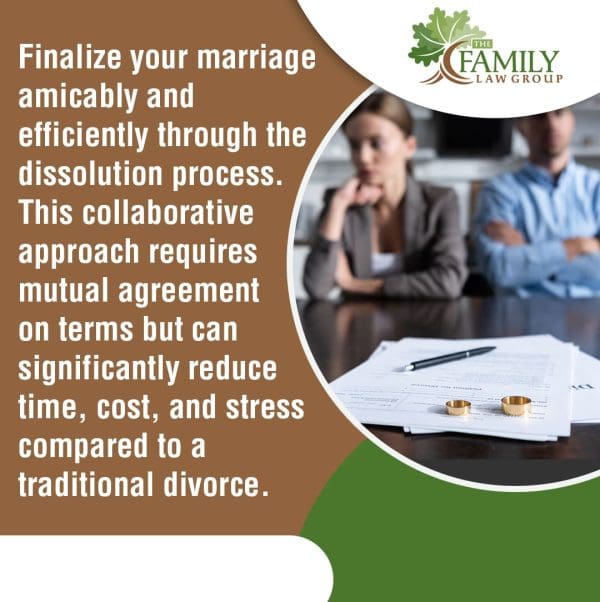
A dissolution of marriage in Ohio is a legal process that ends a marriage with mutual agreement. Both spouses discuss and finalize terms for dividing assets, debts, and other financial responsibilities before submitting the agreement to the court.
In practice, many couples use dissolution to avoid extended court proceedings. You might divide jointly held bank accounts, assign responsibility for credit card debt, or agree on mortgage payments. Taking the time to outline all shared financial responsibilities can reduce the likelihood of misunderstandings or disputes later.
Differences Between Dissolution and Divorce
Dissolution is non-adversarial, while divorce may involve contested proceedings. A dissolution of marriage in Ohio requires that both spouses agree to the terms, whereas divorce can proceed even if one spouse contests the arrangement, often leading to additional hearings and delays.
Most uncontested dissolutions complete within 30–90 days. Contested divorces, by contrast, often extend beyond six months due to multiple court appearances and pre-trial requirements. By choosing dissolution, you may save considerable time and reduce the number of hearings you attend. Couples who prefer a structured, collaborative approach often find that the process helps them manage financial arrangements more clearly and reduces administrative complications.
Overview of the Cuyahoga County Dissolution Process
Handling a dissolution in Cuyahoga County involves several steps that guide you from agreement preparation to the final court hearing. Knowing what each stage involves helps you approach the process with confidence and clarity.
Filing the Separation Agreement
The Cuyahoga County dissolution process begins with submitting a signed separation agreement to the court. This agreement records how you and your spouse have decided to divide property, manage shared debts, and handle financial arrangements.
For example, you might indicate which spouse retains ownership of a home or vehicle, or allocate responsibility for outstanding loans and credit accounts. The agreement may also detail how joint savings or investment accounts are to be distributed. Presenting a complete and organized separation agreement at the start makes the rest of the process smoother and helps the court recognize that both parties have reached a mutual understanding.
Timeline and Court Scheduling
After filing, the court schedules a final dissolution hearing in Ohio within 30–90 days. The exact timing varies depending on how quickly documents are submitted and the court’s calendar.
Cuyahoga County courts handle numerous cases, and scheduling adjustments may occur based on workload or administrative priorities. Preparing your documents in advance and reviewing them carefully reduces the likelihood of delays. When your hearing is set, you will have a clear timeline of what to expect leading up to the final appearance.
The Role of the Final Hearing
The final dissolution hearing in Ohio confirms full disclosure of all assets and liabilities. Both spouses appear in court to verify that the separation agreement reflects the information accurately and that no items have been omitted.
During this hearing, the judge examines the agreement and listens to the sworn statements of both parties. If everything is complete and accurate, the judge issues the final order, officially ending the marriage. This step concludes the dissolution process and legally formalizes the terms you and your spouse have agreed upon.
At The Family Law Group, our attorneys guide you through every phase of the Cuyahoga County dissolution process, from preparing the separation agreement to attending the final hearing, providing support and clarity throughout.
Steps to Prepare for Your Dissolution Hearing
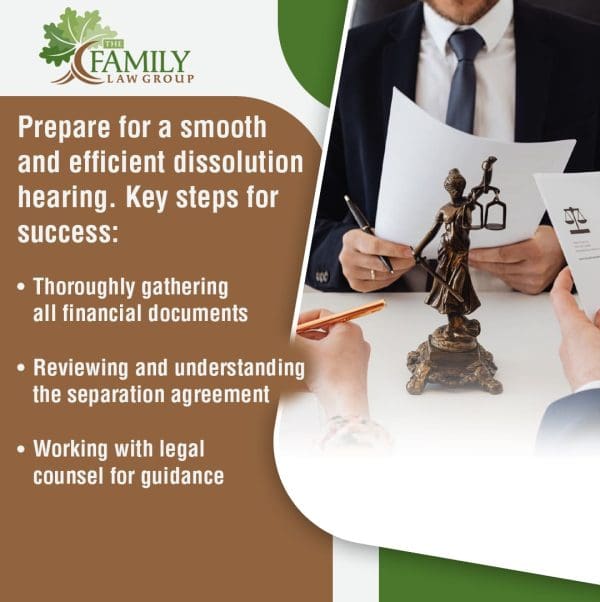
Preparing for a dissolution hearing in Cuyahoga County involves several important steps that help the process move smoothly. By taking time to organize your documents and review agreements, you can attend the hearing with clarity and confidence.
Gathering Necessary Documents
Collect all relevant financial records and agreements before the dissolution hearing in Ohio. Start by gathering documents that reflect your financial situation clearly. This includes bank statements, property deeds, loan statements, and any other records that show ownership or debt obligations.
For example, if you own a home, bring the mortgage documents and property tax statements. If you have investments, provide account statements from banks or brokerage firms. Organizing these records beforehand allows you to address questions during the hearing without unnecessary delays and keeps the discussion focused on the facts.
Reviewing Financial Information
Review financial details to verify accuracy. Take the time to examine account balances, outstanding debts, and ownership of assets. By reviewing this information carefully, you can prevent misunderstandings and reduce the risk of disputes during the dissolution process.
Examples include confirming loan balances, checking retirement accounts, and separating joint from individual assets. Paying attention to these details helps both you and your spouse have a clear picture of the financial matters involved.
Understanding the Separation Agreement
Know the terms of your separation agreement thoroughly. Make sure you are familiar with how property, debts, and other responsibilities are allocated between you and your spouse.
For instance, if you are selling a shared property, the agreement should outline how the proceeds are divided. Similarly, arrangements for shared accounts should be explained clearly. Being prepared to discuss each point in the agreement helps the hearing progress efficiently and avoids unnecessary confusion.
Working with Legal Counsel
Consult an experienced attorney to guide the dissolution hearing in Ohio. Having legal support helps you address procedural questions and clarifies the legal aspects of the separation agreement.
Examples include reviewing the terms of your settlement, assisting with court filings, and explaining the steps involved in the hearing. Legal guidance can help you feel more confident and prepared as you move through the Cuyahoga County dissolution process.
At The Family Law Group, our attorneys assist clients with every step of the dissolution hearing. We guide you through document preparation, financial review, and discussions about your separation agreement to support a smoother process.
What to Expect During the Dissolution Hearing
Preparing for a dissolution hearing can feel overwhelming, but knowing how the process unfolds helps you approach the day with confidence. This section explains what happens in court, what you will need to do, and how the judge handles the proceedings.
The Courtroom Procedure
The hearing is concise and procedural. During a dissolution hearing, both spouses appear before the judge to present the required documentation and confirm the agreements they have made. The judge may ask questions to clarify details or request additional explanations about the submitted documents. In most cases, the hearing lasts between 15 and 30 minutes. The judge’s role is primarily to review the paperwork and confirm that all necessary information has been disclosed.
Testifying on Full Disclosure of Assets and Liabilities
Each spouse confirms that all financial information is complete and accurate. You will need to clearly state ownership of bank accounts, investments, retirement funds, and any outstanding debts. This step helps avoid misunderstandings or future disputes by creating a transparent record of all assets and liabilities. For instance, you may verbally confirm the balance of each account or the details of property ownership while the judge records your statements.
Judge’s Role in Finalizing the Dissolution
The judge reviews the agreement and issues a final order. After confirming that all disclosures have been made and both parties agree to the terms, the court signs the order officially ending the marriage. This step completes the dissolution process under Ohio law. The judge carefully checks that the agreement follows statutory requirements and that the terms are clear to both spouses.
How The Family Law Group Assists Clients
Preparing for a dissolution hearing can feel overwhelming, especially when you are managing financial and personal matters at the same time. Knowing that someone is guiding you through the process can help you approach each step with confidence.
Legal Guidance for a Smooth Process
Our attorneys guide clients through every step of the dissolution hearing in Ohio. We help you organize documents, examine agreements, and explain the steps you will face in court.
For example, we can draft a separation agreement tailored to your circumstances, outline what the court will review during your hearing, and walk you through the procedures so that you feel ready and supported. Each step is handled with clarity, reducing unnecessary stress and keeping the process moving forward efficiently.
Collaborative and Non-Adversarial Approach
We focus on amicable resolutions whenever possible. By using mediation or collaborative meetings, you and your spouse can work through financial matters outside of the courtroom while maintaining control over the outcomes.
Clients often find that discussing options in a structured, collaborative setting allows them to resolve questions about shared property or debts without extended court involvement. Mediators help guide these discussions, and our attorneys are present to provide guidance and protect your interests throughout.
Addressing Complex or High-Conflict Cases
For challenging situations, we provide assertive legal representation. When disagreements arise about property division or financial responsibilities, our team advocates on your behalf during negotiations or court proceedings.
For instance, if disputes over shared assets cannot be resolved through discussion, our attorneys represent you at hearings and make sure that your position is clearly presented. This approach helps prevent delays and gives you support during more complicated cases.
Common Questions About Dissolution Hearings in Ohio
Preparing for a dissolution hearing in Ohio can raise several practical questions. Knowing what to expect helps you approach the process with clarity and confidence.
What is the Duration of the Dissolution Process?
Uncontested dissolutions usually finalize within 30–90 days. This timeline varies depending on court schedules and whether all required documents are complete. You may find that some cases move faster if documents are ready and both parties have reviewed their agreements carefully. Conversely, any missing paperwork or additional clarifications can extend the timeline. Being organized before the hearing helps the process move more smoothly.
What are the Requirements for Completing the Hearing?
A finalized separation agreement and disclosure of all assets and liabilities are required. Both spouses must submit signed documentation and attend the hearing in person. You should review the agreement thoroughly to confirm that all financial details and property distributions are accurately recorded. The court will ask questions to verify that both parties have openly shared information, which protects each person’s rights and keeps the process transparent.
What are the Options for Resolving Disputes?
Disputes can be addressed through mediation or attorney-led negotiations. If disagreements arise during the dissolution process, these methods help you work toward a resolution without going to trial. Litigation is only used if an agreement cannot be reached. Mediation sessions or negotiation meetings give both spouses a chance to discuss concerns directly while having legal guidance available, which can reduce stress and save time.
At The Family Law Group, our attorneys guide clients through common questions about dissolution hearings in Ohio. We help you prepare for timelines, required documents, and potential disputes to manage the process efficiently and clearly.
Schedule a Consultation with The Family Law Group
Reach out to The Family Law Group to start your dissolution hearing in Ohio. Our experienced attorneys assist you in preparing documents, reviewing separation agreements, and guiding you through the hearing process. Call us today at (216) 239-5050 or visit our Contact Page to schedule a confidential consultation.
Schedule a Consultation
You can get in touch with us through phone or our contact form. However, contacting us does not automatically create an attorney-client relationship. For these reasons, please refrain from sending any confidential information to us before we establish a legal attorney-client relationship.
Are you in the Cleveland and Northeast Ohio area? We are here to answer all your questions, schedule your initial consultation today!
 SCHEDULE A CONSULTATION