
Collaborative divorce provides a structured way for spouses to resolve legal matters without court litigation. At The Family Law Group, you work with attorneys who guide discussions focused on agreement rather than conflict. You stay involved in each decision, from financial matters to final settlement terms, while maintaining privacy throughout the process.
You will see how the collaborative divorce process works, what collaborative divorce attorneys do, and how Cleveland collaborative divorce services support communication between both parties. You also gain clarity on benefits, possible limitations, and the role of neutral professionals such as financial advisors. We help you approach each stage with clear legal direction and steady support throughout the process in Cleveland, Ohio.
What Is Collaborative Divorce?
Collaborative divorce is a legal process where spouses resolve disputes through structured negotiation without court litigation. You take part in guided discussions with your attorney, focusing on written agreements instead of courtroom hearings. Each step centers on resolving financial and legal matters through direct communication between both sides and their legal representatives.
Each party works with a collaboratively trained attorney, and the process focuses on reaching written agreements through discussion instead of courtroom decisions. All discussions remain outside litigation while both sides work toward settlement terms. You share information in a structured setting and address property and financial responsibilities step by step.
How It Differs From Traditional Divorce
Collaborative divorce resolves issues through negotiation, while traditional divorce relies on court rulings.
| Feature | Collaborative Divorce | Traditional Divorce |
| Process | Negotiation-based | Court-driven |
| Privacy | Private | Public record |
| Decision Control | Parties decide | Judge decides |
In collaborative divorce, you remain involved in shaping outcomes through discussion and agreement. In traditional divorce, outcomes follow court procedures that determine final resolutions without joint control from both parties.
What Are Collaborative Divorce Services?
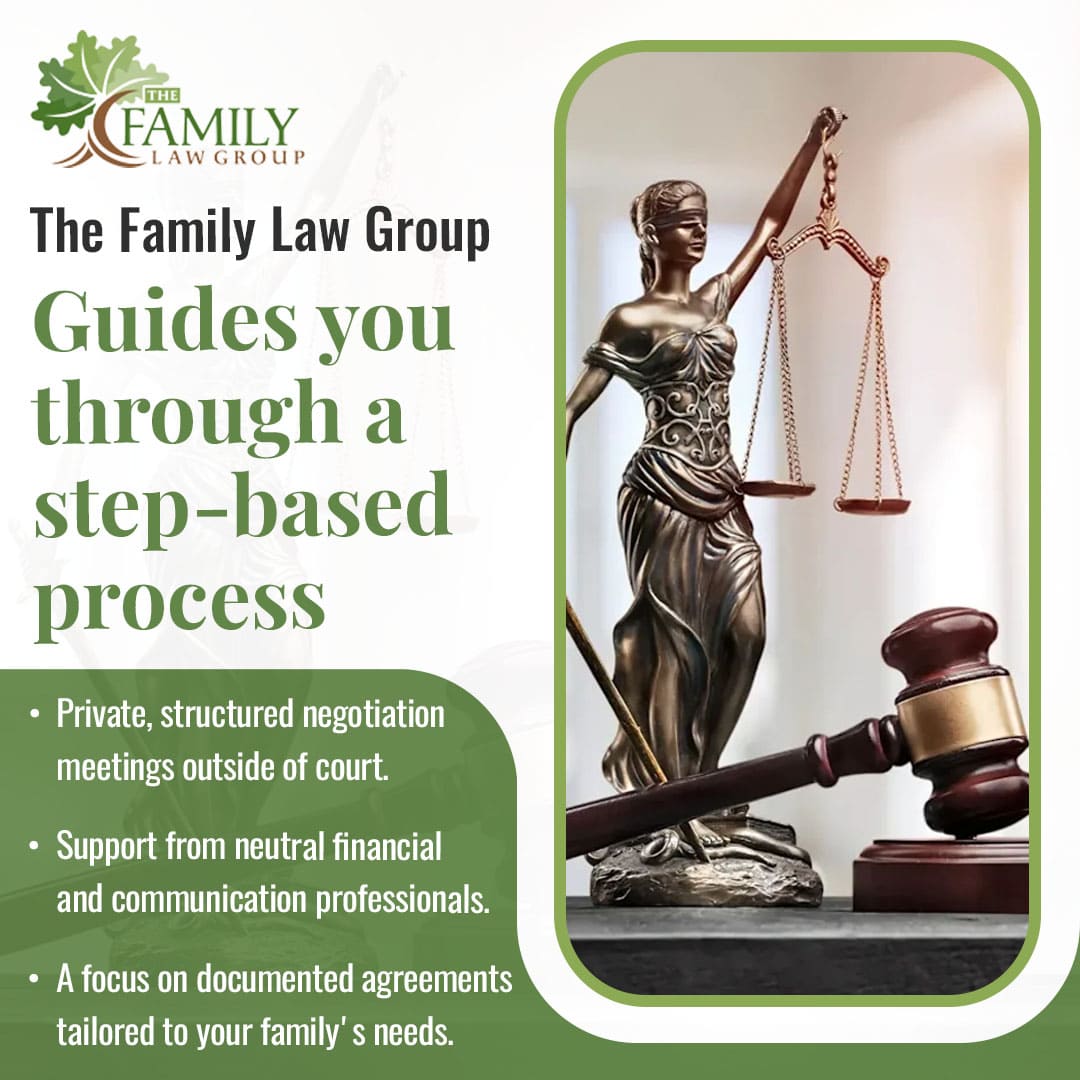
Collaborative divorce services give you structured legal and professional support outside of court. You work through discussions that focus on agreement instead of litigation. These services guide both parties through each stage with clarity and structured communication.
Legal Support in Collaborative Divorce
Legal support includes attorney guidance, document preparation, and structured negotiation management. You work with your attorney to understand your legal position in clear terms under Ohio family law.
Your attorney reviews settlement terms and explains how each proposal affects financial outcomes. Meetings follow a structured order, helping you stay focused on each topic without confusion or conflict-driven exchanges during discussions.
Role of Neutral Professionals
Neutral professionals support communication and financial clarity without representing either party. You work with trained professionals who remain neutral and present structured financial and communication details for both sides. They coordinate with attorneys and support steady progress through each stage, helping you review accurate information that guides settlement discussions.
Financial Advisors
Financial advisors analyze income, assets, and obligations to support fair financial agreements. You receive detailed breakdowns of financial data that reflect both short-term and long-term responsibilities. These reports help you and the other party evaluate division of property, debts, and ongoing financial commitments.
The financial review process removes uncertainty around numbers and documentation. You work with verified data that supports structured discussions during each meeting.
Divorce Coaches
Divorce coaches assist with communication and meeting preparation during the collaborative divorce process. You receive support in preparing for discussions so each meeting stays focused on resolution topics. Coaches help you stay aligned with the agenda and manage communication during high-tension moments.
They also support consistency in communication between meetings. This helps both parties maintain steady progress and stay engaged in the structured process.
Collaborative Divorce Process Explained
The collaborative divorce process follows a structured sequence that moves you and the other party toward a final settlement without court litigation. You work through each stage in a defined order that keeps discussions organized and focused on written outcomes.
Step 1: Hiring Collaborative Divorce Attorneys
Each spouse hires a collaborative divorce attorney to begin the process. You start by selecting an attorney who works within the collaborative model. This gives you legal guidance from the beginning and sets expectations for how discussions will take place.
Attorneys provide direction on legal rights and responsibilities. You receive structured advice that supports consistent communication during negotiations. This step sets the tone for how both sides approach the process.
Step 2: Participation Agreement
A participation agreement commits both parties to resolving disputes without court intervention. You and the other party sign a written agreement that confirms the choice to avoid litigation. This agreement defines how discussions will move forward and what standards both sides will follow during the process.
It also outlines how meetings are conducted and how information is exchanged. You stay within this framework from start to finish, which keeps the process organized.
Step 3: Information Sharing
Information sharing requires full disclosure of financial and relevant documents. You exchange financial records and other required documents with the other party. This includes income details, assets, and obligations that affect settlement terms.
This exchange supports clear and fact-based discussions during negotiations. You rely on accurate information from both sides to move discussions forward without delays caused by missing details.
Step 4: Negotiation Meetings
Negotiation meetings allow both parties to discuss and resolve issues in a structured setting. You attend scheduled meetings with your attorney and the other party. Each meeting follows a set agenda, so discussions remain focused on one topic at a time.
This structure helps you address each issue directly. You work through topics such as financial arrangements and property matters in a step-by-step manner that keeps conversations clear and productive.
Step 5: Final Agreement and Court Approval
The final agreement is submitted to the court for formal approval. You and the other party finalize a written settlement that reflects all agreed terms. This document is then submitted to the court for review and approval.
The court reviews the agreement without holding hearings or re-evaluating disputes. Once approved, the settlement becomes legally binding and closes the process.
Benefits of Collaborative Divorce
Collaborative divorce allows couples to resolve disputes privately while maintaining control over decisions. This approach supports structured communication and written agreements without courtroom involvement. You work through each issue step by step, with clear direction from your legal team.
Privacy and Confidentiality
The process remains private because it avoids public court proceedings. You do not go through open hearings or public filings. Discussions stay within the collaborative team, including attorneys and agreed professionals, limiting access to personal financial and legal details.
Records stay within legal boundaries tied to the case. You control what is shared at each stage, keeping sensitive matters contained while moving through a structured legal process toward resolution.
Reduced Conflict
Structured negotiation reduces direct conflict between parties. You take part in scheduled discussions guided by agreed rules. This setup keeps conversations focused on specific issues instead of unstructured reactions or disputes.
Each meeting follows a clear agenda. You address one topic at a time, which reduces overlap and repeated arguments. This approach supports steady communication and keeps discussions centered on resolution rather than confrontation.
Cost and Time Efficiency
Collaborative divorce often reduces time and legal costs compared to litigation. You spend less time in court because the process avoids repeated hearings, which lowers court-related expenses and reduces delays linked to scheduling and filings.
Meetings are arranged directly between parties and attorneys, reducing waiting periods common in litigation. You move through financial and legal topics in a direct sequence, supporting steady progress through each stage of the divorce process.
Control Over Outcomes
Both parties retain control over final decisions instead of relying on a judge. You stay involved in financial arrangements and settlement terms, and nothing progresses without agreement from both sides.
You and the other party shape the final agreement through discussion. The outcome reflects mutual decisions reached during the process rather than a court-issued ruling.
The Family Law Group supports clients who choose Cleveland collaborative divorce services and structured negotiation over litigation.

Potential Drawbacks of the Collaborative Divorce Process
The collaborative divorce process gives you structure and privacy, yet it depends heavily on cooperation from both sides. You also need to stay prepared for possible changes in direction if discussions do not lead to agreement. These points help you see how participation rules and process structure affect outcomes during collaborative divorce services in Cleveland.
Voluntary Participation
Either party may leave the collaborative divorce process at any time. You stay in control of your participation and continue only while both sides remain committed to resolving issues through structured discussions. If one party withdraws, the process ends, and negotiations stop in that format.
If the process ends, the matter may move into court proceedings. You shift from guided discussions to litigation, where unresolved issues are decided by a judge through formal legal procedures.
Need for New Attorneys if Process Ends
If the collaborative process ends, both parties must hire new attorneys for litigation. The collaborative divorce attorney works only within negotiation-based resolution and does not continue into court representation.
Once the process stops, you need new legal representation for litigation. The participation agreement separates collaborative work from courtroom advocacy, which changes both your legal team and the direction of your case.
Cost Considerations
Costs may increase if the process transitions to court proceedings. You invest in structured negotiation during collaborative divorce. If no agreement is reached, the case moves into litigation with added legal steps such as filings, hearings, and preparation work.
These additional stages require more time and legal effort. Total cost depends on how far discussions progressed before the shift and how much work remains for resolution.
Role of Collaborative Divorce Attorneys
Collaborative divorce attorneys play a central role in guiding discussions between both parties. You work with them to structure communication and move toward written agreements without courtroom involvement.
Legal Guidance and Strategy
Attorneys explain legal rights and structure negotiation strategies. You rely on your attorney to walk you through Ohio family law requirements in a clear and practical way. They break down how property division, financial responsibilities, and other marital matters apply to your situation. This allows you to see how each decision connects to legal standards in Cleveland.
Your attorney also helps you plan negotiation steps. You receive direction on how to approach discussions so that conversations stay productive and centered on resolution. This approach helps both sides stay aligned on facts rather than assumptions or emotional responses.
Facilitating Negotiations
Attorneys manage discussions to maintain focus and progress. You participate in structured meetings where your attorney helps guide the flow of conversation. This support keeps discussions on track and prevents repeated disagreements from slowing progress.
Your attorney also steps in when conversations shift away from resolution topics. This keeps both parties focused on practical outcomes rather than extended disputes. You stay engaged in decisions while your attorney helps maintain structure throughout each meeting.
Drafting Agreements
Attorneys prepare and finalize the legal agreement for court submission. You review and discuss the terms developed during negotiations before anything becomes final. Your attorney translates these agreements into legally valid documents that reflect what both parties have accepted.
The final agreement becomes the document submitted to the court for approval. At this stage, the court’s role is limited to reviewing the settlement. It does not replace the negotiation process that took place earlier.
Why Choose The Family Law Group for Collaborative Divorce in Cleveland
The Family Law Group provides collaborative divorce services focused on structured negotiation and client-centered legal support. You work with us in a process that prioritizes clear communication between both parties and careful handling of legal details. We guide discussions so you can move through each stage with clarity and direction. The firm serves clients across Cleveland and Northeast Ohio with experience in family law matters.
Experience in Family Law
The firm has extensive experience handling collaborative divorce and related legal matters. You benefit from our hands-on work with divorce cases involving property division, financial planning, and structured settlement discussions. Our experience helps us stay consistent in managing each phase of the process.
This experience supports consistent handling of financial and legal discussions during the process. You work with a team that stays focused on detail-oriented review of documents and agreements. This supports steady progress during negotiations and reduces unnecessary delays in communication between parties.
Focus on Non-Adversarial Solutions
The Family Law Group focuses on resolving disputes through negotiation rather than litigation. You participate in a process that keeps discussions centered on agreement instead of court disputes. We guide conversations in a way that supports direct resolution between both parties.
This approach supports agreement-based outcomes while reducing courtroom involvement. You stay engaged in discussions that prioritize settlement terms rather than legal confrontation. This keeps the process structured and focused on resolution outside of court procedures.
Client-Centered Approach
The firm provides personalized legal strategies based on each client’s situation. You receive guidance shaped around your financial circumstances, goals, and priorities. We take time to review the details of your situation before moving forward with recommendations.
Each case receives tailored guidance based on financial structure and legal needs. You work through a process that reflects your specific situation rather than a fixed template. This approach helps you stay informed and involved in each step of the collaborative divorce process.
Speak With Our Collaborative Divorce Team in Cleveland
You can take the next step by connecting with The Family Law Group for collaborative divorce services that focus on structured negotiation and clear legal direction. Our team is available to review your situation and explain how the collaborative divorce process may apply to your goals in Ohio.
Call us at (216) 239-5050 or use our Contact Page to schedule a consultation. You can reach out today and start a conversation with collaborative divorce attorneys who guide you through each stage with steady support.
Schedule a Consultation
You can get in touch with us through phone or our contact form. However, contacting us does not automatically create an attorney-client relationship. For these reasons, please refrain from sending any confidential information to us before we establish a legal attorney-client relationship.
Are you in the Cleveland and Northeast Ohio area? We are here to answer all your questions, schedule your initial consultation today!
 SCHEDULE A CONSULTATION