
Spousal support is an important aspect of divorce that affects many families in Ohio. At The Family Law Group, we help you navigate the rules and requirements of alimony laws in Ohio so you can approach your situation with clarity. Whether you are seeking support or may be required to provide it, knowing how the process works can make a meaningful difference in managing financial responsibilities after divorce.
Courts consider several factors when determining whether spousal support is appropriate, including income, earning potential, length of marriage, and the standard of living established during your marriage. Our Cleveland-based attorneys guide you through each step, from filing petitions to negotiating agreements, ensuring your interests are represented at every stage. By working with our team, you gain clear explanations of your rights and options under Ohio alimony laws, helping you handle post-divorce finances with confidence.
What Is Spousal Support?
Spousal support is financial assistance paid by one spouse to another following divorce or dissolution. This support addresses the gap between spouses’ incomes or financial resources. For example, if one spouse dedicated years to managing the household or supported the other’s education or career, they may have less income or earning potential after divorce.
According to Ohio law, courts look at multiple factors, including the length of the marriage, the standard of living during marriage, and the financial needs of both parties, to determine whether support should be granted.
Types of Spousal Support
Ohio recognizes several types of spousal support to address different circumstances:
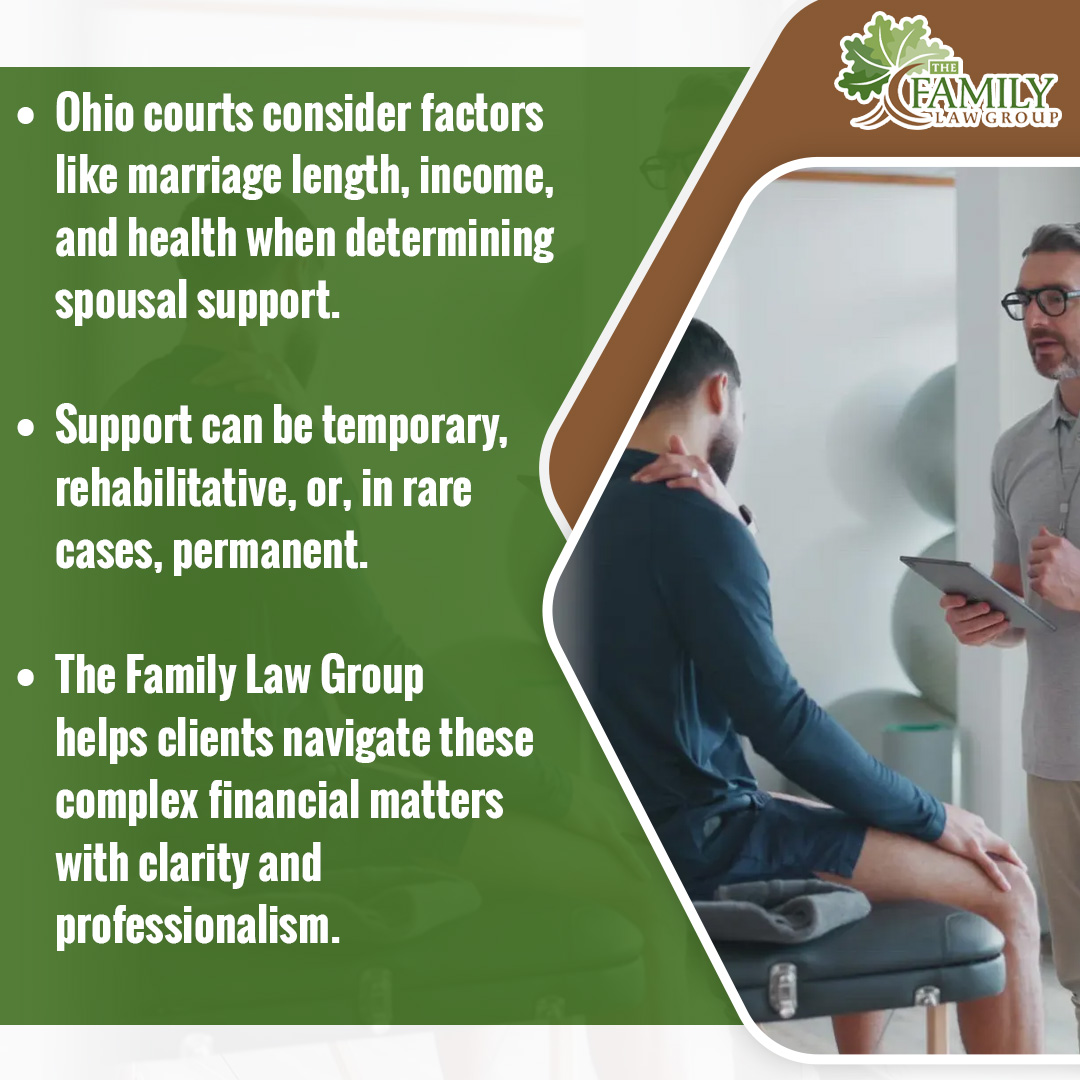
- Temporary Support: Paid during divorce proceedings to help the lower-earning spouse maintain a reasonable lifestyle. This type ends once the court finalizes the divorce.
- Rehabilitative Support: Provided for a limited period to help a spouse gain education, training, or skills to support themselves independently.
- Permanent Support: Rare and awarded in cases where one spouse is unable to become self-supporting due to age, illness, or disability.
- Reimbursement Support: Compensates a spouse who contributed financially or otherwise to the other’s education, training, or career development.
| Type of Support | Purpose | Typical Duration |
| Temporary | Maintain lifestyle during divorce | Until divorce finalization |
| Rehabilitative | Support for education or career training | Limited, based on need |
| Permanent | Long-term support for spouse unable to work | Long-term, rare |
| Reimbursement | Repayment for contributions to other spouse’s career | As awarded by court |
Each type of support has specific criteria and timelines. Temporary and rehabilitative support are more common than permanent support, reflecting the emphasis courts place on helping spouses transition without creating indefinite obligations.
Eligibility for Spousal Support in Ohio
Determining eligibility for spousal support can feel complex, but courts follow clear guidelines to decide who qualifies. By knowing the main factors, you can approach your case with confidence and clarity about potential outcomes.
Factors Considered by Courts
Courts determine eligibility based on financial need and the circumstances of the marriage. Judges evaluate the overall financial situation of both spouses and the way assets and responsibilities were shared during the marriage.
Several factors typically guide these decisions:
- Length of marriage: Longer marriages generally increase the likelihood of support being awarded. For example, Ohio courts often treat marriages lasting over ten years differently from those under five years, particularly regarding the duration of payments.
- Income and earning potential of both spouses: Courts compare your current income with your spouse’s and consider potential career growth. A spouse with limited income or reduced employment opportunities may receive support.
- Age and physical or mental health: Older spouses or those facing health challenges may qualify for longer or higher support if working full-time is not realistic.
- Standard of living during the marriage: Judges review the lifestyle you and your spouse maintained. The goal is to avoid a dramatic drop in living conditions for the supported spouse.
- Contributions to the other spouse’s education or career: If you contributed financially or supported your spouse while they completed a degree or professional training, reimbursement or spousal support may reflect that investment.
Who Can Request Support
Either spouse may request spousal support if financial need exists. Spousal support laws in Ohio allow judges to examine all income sources, property ownership, and ongoing obligations when deciding eligibility.
Even if one spouse has a higher income, courts will consider whether the other spouse can meet reasonable living expenses after divorce. This balanced approach helps courts address disparities fairly and can affect both temporary and long-term support awards.
At The Family Law Group, our attorneys help you present your financial situation clearly to the court and guide you through the eligibility process, making certain your rights under spousal support laws in Ohio are fully represented.
How Ohio Alimony Is Calculated
Calculating spousal support in Ohio involves several factors that the court reviews carefully. You will see that both your financial situation and your spouse’s situation influence the outcome.
Court Guidelines
Ohio courts calculate spousal support using income, living expenses, and the marriage’s duration. Judges look at the financial details of both spouses. This includes how much each person earns, the costs of daily living, and debts or other financial responsibilities. The standard of living you maintained during your marriage also plays a role. Courts balance these elements to determine an amount that reflects the economic realities of both parties.
Role of Negotiation and Settlement
Spousal support can be arranged outside of court through mediation or collaborative divorce. You and your spouse have the option to discuss support terms together with guidance from mediators or attorneys. Agreements reached in this way can save time and reduce legal costs. They also provide flexibility to set amounts and timelines that fit both of your financial circumstances, while still following Ohio alimony laws.
Duration and Modification of Spousal Support
Spousal support is not always permanent, and the length of time you may receive or pay it often depends on your specific situation. This section explains how courts determine duration and the circumstances under which support can be changed or ended.
Typical Duration
Spousal support generally lasts for a period proportional to the marriage length.
- Short-term marriages: Support usually continues for one to three years.
- Long-term marriages: Payments may extend for several years, and in rare cases, may continue indefinitely.
Courts consider how long you were married and the role each spouse played during that time. They look at your income and ability to support yourself after the divorce. While temporary support provides immediate relief, long-term payments may be ordered for spouses who need extended financial assistance.
Modification or Termination
Courts may adjust or terminate spousal support if circumstances change. Some situations that could lead to a change include:
- A substantial increase or decrease in either spouse’s income.
- The recipient spouse getting remarried.
- The recipient spouse living with a new partner.
Changes in health, employment, or financial obligations can also affect support. The court reviews these circumstances carefully before altering any payments.
At The Family Law Group, our attorneys guide you through these rules and help you address questions about duration and modifications. We work with you to represent your interests and clarify how alimony laws in Ohio apply in your case.
Filing and Legal Process in Ohio
Filing for spousal support in Ohio involves several steps that follow state law requirements. Each stage of the process has specific procedures you will need to follow to have your request considered by the court.
Steps to Request Spousal Support
Requesting spousal support begins by filing a petition with the court. After you submit the petition, there are several important steps you will go through:
- Providing complete financial disclosures: You will need to supply detailed records of your income, expenses, and assets. This gives the court a clear picture of your financial situation.
- Participating in mediation or negotiation sessions: In many cases, the court encourages mediation to reach an agreement on spousal support without lengthy hearings. You will meet with your spouse and mediators to discuss terms.
- Attending court hearings if an agreement is not reached: If negotiations do not result in an agreement, a judge will review your petition and any supporting evidence before making a decision on support.
Documentation Required
Courts require evidence of income and financial need. You will need to provide documents that clearly show your financial position.
Commonly requested items include:
- Tax returns and W-2 forms for both spouses.
- Recent pay stubs and bank statements.
- Records of property, real estate, and other significant assets.
These documents help the court determine the amount and duration of spousal support. Properly preparing and submitting them allows the process to move more smoothly. The Family Law Group can guide you through each step of filing and presenting your documentation, helping you approach spousal support requests with confidence and clarity.
How The Family Law Group Can Assist
Spousal support matters can feel complex, but you do not have to navigate them alone. Our team works directly with you to clarify your options and provide support throughout the entire process.
Legal Guidance and Representation
Our attorneys handle all aspects of spousal support requests, negotiations, and court filings. You will have a dedicated professional reviewing your case, preparing the necessary documents, and advocating for fair consideration of your financial needs.
The team examines all relevant factors, including income, expenses, and the length of your marriage, to present your situation effectively to the court. You can rely on your attorney to address questions promptly and guide you through each stage of the proceedings, whether you are requesting support or responding to a claim.
Alternative Dispute Resolution
We offer mediation and collaborative divorce options to reduce conflict, lower costs, and provide predictable results. These approaches allow you and your spouse to reach agreements in a structured environment, without going through prolonged court hearings.
You have the opportunity to work directly with the other party, supported by experienced professionals, to discuss terms, review finances, and finalize arrangements that reflect your circumstances. This approach can save time and create a clearer path forward for both parties.
Get Professional Guidance on Spousal Support Today
Take the next step with confidence by contacting The Family Law Group. Call (216) 239-5050 or visit our Contact Page to schedule a confidential consultation. Our Cleveland-based attorneys provide clear, professional guidance on spousal support and Ohio alimony laws, helping you address your financial responsibilities after divorce with clarity and support.
Schedule a Consultation
You can get in touch with us through phone or our contact form. However, contacting us does not automatically create an attorney-client relationship. For these reasons, please refrain from sending any confidential information to us before we establish a legal attorney-client relationship.
Are you in the Cleveland and Northeast Ohio area? We are here to answer all your questions, schedule your initial consultation today!
 SCHEDULE A CONSULTATION