
Digital technology affects almost every aspect of divorce today. At The Family Law Group, we help you address the challenges of dividing online accounts, cryptocurrency, and other digital property during divorce proceedings. Digital assets in divorce, including virtual wallets, online businesses, and NFTs, can carry substantial financial value, while social media activity may influence custody or settlement discussions.
Handling digital assets properly requires careful planning and professional guidance. Retain counsel experienced with digital assets and, where appropriate, a forensic accountant or blockchain analytics expert to identify holdings, reconstruct transaction histories, trace transfers across wallets/exchanges, and prepare valuation reports for settlement or trial. At the same time, your online behavior, including posts and messages, can impact how your case unfolds in court.
Our team in Cleveland works closely with you to manage these matters clearly and confidently. By addressing cryptocurrency and divorce, handling digital assets during divorce, and managing social media effectively, you gain control over your digital and financial interests while reducing potential conflicts.
Understanding Digital Assets in Divorce
Digital property is becoming a central factor in divorce cases today. You may already have online accounts, digital currencies, or intellectual property that carry real value, and these assets need careful attention during the divorce process.
What Are Digital Assets?
Digital assets are any items of value stored, traded, or managed electronically. These assets can take many forms and often extend beyond traditional financial accounts. Common examples include cryptocurrency holdings such as Bitcoin or Ethereum, non-fungible tokens (NFTs), online business revenue, PayPal or Venmo balances, digital wallets, and even domain names or intellectual property like e-books, graphics, or software.
Specific examples you might encounter include:
- A cryptocurrency portfolio held in an exchange or a private wallet, which may fluctuate daily in value.
- Income generated from an online business or content platform, such as a monetized website or YouTube channel.
- Funds stored in online payment accounts or virtual marketplaces used for personal or business transactions.
These digital holdings form a portion of your marital estate and are subject to division during divorce proceedings. Failing to list or account for them accurately can lead to disputes or delayed settlements.
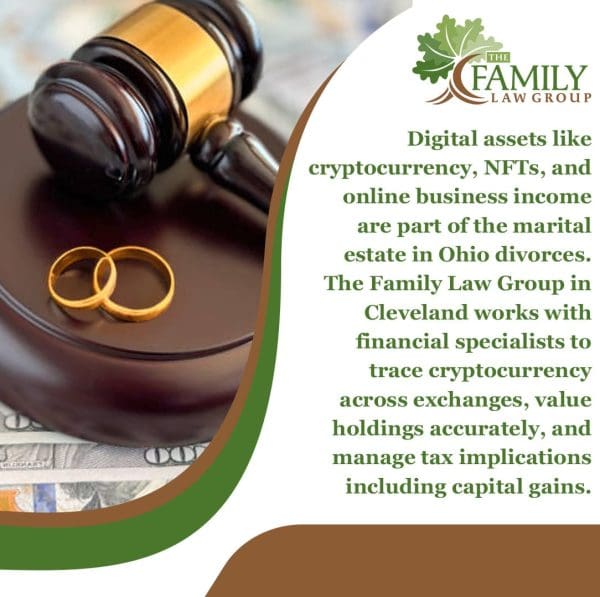
Why Digital Assets Matter During a Divorce
Digital assets impact property division, valuation, and ownership. Unlike traditional bank accounts, many digital assets do not leave paper trails, which can make them difficult to track or value. For example, cryptocurrency transactions can move quickly between wallets or exchanges, and income from digital businesses may be deposited into multiple accounts. Hidden transfers, unreported earnings, or overlooked digital property can create disagreements over fair division.
Ohio law requires parties to identify and disclose marital property so the court can equitably divide assets. Digital property; including cryptocurrencies, online business income, and domain/IP, is generally treated as property for division purposes and must be accounted for during discovery and property-division proceedings. Courts and practitioners rely on clear documentation, transaction histories, and verified records to value and allocate these assets under Ohio’s property-division rules.
In some cases, divorces involve disputes over hidden or misrepresented digital assets. By keeping careful records of your accounts, transaction histories, and digital business activity, you help your attorney advocate effectively for your rights.
At The Family Law Group, we work with clients in Cleveland to identify, document, and manage digital assets in divorce cases. Our team provides guidance on valuing cryptocurrency, online businesses, and other digital property to reduce conflicts and support a fair resolution.
Cryptocurrency and Divorce: Tracking and Valuing Virtual Wealth
Digital assets like cryptocurrency have become a common part of modern divorce cases. You may not realize the full extent of virtual holdings or how they can impact property division, making it important to address them early in the process.
Common Forms of Cryptocurrency in Divorce Cases
Bitcoin, Ethereum, and other cryptocurrencies are common in asset division. These digital currencies are often stored in private wallets, online exchanges, or cold storage accounts. Access depends on encryption keys, which means proving ownership and tracing transaction history can be complicated.
Consider these scenarios:
- One spouse holds Bitcoin across several wallets on different exchanges, making it difficult to track the total value.
- Ethereum is invested in a digital business or smart contract, generating passive income that may need to be divided during divorce.
Because cryptocurrency values can fluctuate rapidly, accurate valuation is essential for fair division. Cases involving cryptocurrency and divorce often require detailed accounting and legal oversight to prevent disputes.
Challenges in Handling Cryptocurrency
The main challenges are traceability and valuation. Cryptocurrency moves quickly between wallets and exchanges, often leaving little traditional documentation. If a transfer is made without a record, it can appear as though assets are missing. Market volatility further complicates matters; the value of a single Bitcoin can change by thousands of dollars in a matter of days.
Attorneys frequently work with forensic accountants to reconstruct transaction histories, confirm ownership, and calculate fair market value. This collaboration is vital for handling digital assets during divorce accurately and avoiding conflicts over undisclosed holdings.
Legal and Tax Considerations
Cryptocurrency is treated as property under Ohio law. This classification means all holdings must be disclosed and valued during the divorce process. Transfers between spouses can trigger tax obligations, such as capital gains or losses, which can affect overall settlement calculations.
Keeping detailed records of wallets, exchanges, transaction histories, and transfers is a practical step you can take. Consulting with tax professionals is often necessary to address reporting requirements and prevent disputes or penalties. Proper documentation and professional support allow you to manage cryptocurrency fairly and transparently in your divorce.
At The Family Law Group, our Cleveland attorneys guide you through cryptocurrency and divorce cases with careful attention to tracing assets, valuing holdings, and addressing legal and tax requirements. We work closely with financial experts to make certain that handling digital assets during divorce is done correctly, with full transparency and accurate valuation throughout the process.
Managing Social Media During a Divorce
Social media and divorce have become closely connected in many cases today. Your posts, messages, and online activity can be examined by attorneys, mediators, and even the court during divorce proceedings.
The Role of Social Media in Divorce Proceedings
Social media activity can influence divorce outcomes. Courts and legal professionals often review social media content to evaluate financial behavior, parenting responsibilities, and personal credibility. Publicly shared posts may reveal information about spending habits, travel, or lifestyle that could affect property division or alimony considerations.
For example, a post showing an expensive vacation or undisclosed purchases might trigger questions about hidden assets or financial misrepresentation. Similarly, images or messages related to child care can be examined during custody hearings to assess parenting involvement and suitability. In some cases, social media evidence has affected custody arrangements, spousal support, and the division of property.
Being aware of how your online presence can be interpreted is essential in protecting your interests. Thoughtful management of your accounts reduces unnecessary scrutiny and prevents misinterpretation.
Best Practices for Responsible Social Media Use
Use social media cautiously during a divorce. Limit what you share publicly, avoid discussing legal matters, and refrain from posting emotional or personal content. Adjust your privacy settings and review past posts that could be misunderstood or taken out of context.
Practical steps include:
- Do not tag your location or reveal financial transactions.
- Pause interactions that could escalate conflict or provoke emotional responses.
- Consult your attorney before posting any content related to the divorce or your children.
By following these steps, you control how your online activity appears to others while reducing potential legal risks. The Family Law Group can guide you in handling social media and divorce carefully, helping you protect both your reputation and legal interests throughout the process.

Practical Steps for Handling Digital Assets and Social Media
Dividing property in a divorce now includes digital holdings, which can be complex and sometimes hidden. Taking organized steps to document and protect these assets can make a tangible difference in how your case progresses.
Organize and Document Your Digital Assets
Create a complete record of your digital holdings. Start by listing every online financial account, cryptocurrency wallet, and digital investment you control. Include usernames, passwords, and any access keys or codes associated with these accounts. Keep a detailed record of transaction histories, balances, and ownership details to prevent any discrepancies during the legal process.
Practical examples of documentation include:
- Downloading statements from cryptocurrency exchanges or payment platforms like PayPal, Venmo, or Stripe.
- Recording income and expenses from online businesses, subscription services, or e-commerce sites.
- Retaining receipts, contracts, or intellectual property records such as e-books, digital designs, or domain ownership agreements.
By keeping this information organized, you create a clear picture of your assets and reduce the risk of overlooked or disputed property during divorce.
Work with Professionals
Professional guidance helps manage complex digital assets. Dividing digital holdings often requires expertise beyond standard accounting. Attorneys, financial advisors, and forensic accountants can verify ownership, determine current value, and make sure asset reporting aligns with legal requirements.
For example, a forensic accountant can trace cryptocurrency transactions across multiple wallets and exchanges to establish marital ownership, while a tax advisor can help address any potential reporting obligations for gains or transfers. Working with professionals allows you to handle digital assets in divorce confidently, and it also supports accurate and fair property division.
Protect Your Digital Privacy
Safeguard your online identity and accounts. Your personal and financial data must be protected during the divorce process. Start by updating passwords for all online accounts, enabling two-factor authentication, and separate joint or shared accounts where possible. Check cloud storage, email accounts, and digital subscriptions for sensitive or financial information that could be accessed without your consent.
Maintaining control over your digital privacy reduces the risk of unauthorized access, manipulation of data, or unintended disclosure of personal information. Handling social media and divorce issues carefully, along with protecting digital assets, contributes to a smoother divorce process and helps prevent future disputes.
At The Family Law Group, we work with you to organize, manage, and protect your digital and online holdings. Our team in Cleveland guides clients through the process of documenting digital assets in divorce, tracing cryptocurrency, and safeguarding social media activity, helping you maintain control of your financial and digital property throughout the proceedings.
How The Family Law Group Can Help
Digital assets and social media have added a new layer of complexity to divorce cases. You need a legal team that can address both the financial and digital aspects of your case while guiding you through every step.
Experienced Legal Guidance in Digital Divorce Cases
We provide strategic legal support for digital asset cases. You may be managing cryptocurrency accounts, digital wallets, online business income, or social media evidence during your divorce. Each of these elements can affect asset division, custody decisions, or settlement outcomes. Our attorneys work closely with financial experts to identify, trace, and value digital holdings accurately.
We also help with disclosure and reporting so that every asset is accounted for properly. Beyond litigation, we provide mediation and collaborative divorce options. These approaches allow you to resolve disputes respectfully, reduce stress, and maintain more control over the process.
Tailored Legal Support for Cleveland Families
We deliver personalized legal solutions with discretion and professionalism. Every family faces different challenges, and the way you handle digital property and online accounts may not match another case. You receive guidance that reflects your unique circumstances, whether it involves complex cryptocurrency portfolios, online business revenue, or social media activity. Our attorneys make sure you have support in organizing documents, tracking transactions, and protecting your privacy throughout the divorce process.
Schedule a Consultation with Us Today
Take control of your digital and financial assets during your divorce. The Family Law Group supports clients throughout Cleveland and Northeast Ohio in handling digital assets and social media during a divorce with professionalism and confidentiality. Reach out to discuss your situation and explore legal strategies tailored to your needs. Call (216) 239-5050 to schedule a private consultation. You can also visit our Contact Page to submit your inquiry online and connect with our experienced legal team.
Schedule a Consultation
You can get in touch with us through phone or our contact form. However, contacting us does not automatically create an attorney-client relationship. For these reasons, please refrain from sending any confidential information to us before we establish a legal attorney-client relationship.
Are you in the Cleveland and Northeast Ohio area? We are here to answer all your questions, schedule your initial consultation today!
 SCHEDULE A CONSULTATION